Showing posts with label SFP module. Show all posts

2014/01/19

SFP Plus Direct Attach Copper Cables


FiberStore Direct Attach Cable Assemblies
What is SFP+ Direct Attach Copper Cable?
FiberStore SFP Plus Direct Attach Copper Cable
SFP+ direct attach copper cable, also known as Twinax Cable, is a SFP+ cable assembly used in rack connections between servers and switches. It consists of a high speed copper cable and two copper SFP+ modules. The Plus SFP module allow hardware manufactures to achieve high port density, configurability and utilization at a very low cost and reduced power budget.

Direct Attach Cable assemblies are a high speed, cost-effective alternative to fiber optic cables in 10Gb Ethernet, 8Gb Fibre Channel and InfiniBand applications. They are suitable for short distances, making them ideal for highly cost-effective networking connectivity within a rack and between adjacent racks. They enable hardware OEMs and data center operators to achieve high port density and configurability at a low cost and reduced power requirement.

FiberStore SFP+ copper cable assemblies meet the industry MSA for signal integrity performance. The cables are hot-removable and hot-insertable: You can remove and replace them without powering off the switch or disrupting switch functions. A cable comprises a low-voltage cable assembly that connects directly into two SFP+ ports, one at each end of the cable. The cables use high-performance integrated duplex serial data links for bidirectional communication and are designed for data rates of up to 10 Gbps. Similar to the fiber patch cables, the SFP+ direct attach cables are made up of a cable and two connectors, with the difference that connectors are the SFP+ transceivers instead.

Types of SFP+ Direct Attach Copper Cables
SFP+ Copper Cable assemblies generally have two types which are Passive and Active versions.
FiberStore SFP Plus Passive CableFiberStore SFP Plus Active Cable
1. SFP+ Passive Copper Cable
SFP+ passive copper cable assemblies offer high-speed connectivity between active equipment with SFP+ ports. The passive assemblies are compatible with hubs, switches, routers, servers, and network interface cards (NICs) from leading electronics manufacturers like Cisco, Juniper, etc..

2. SFP+ Active Copper Cable
SFP+ active copper cable assemblies contain low power circuitry in the connector to boost the signal and are driven from the port without additional power requirements. The active version provides a low cost alternative to optical transceivers, and are generally used for end of row or middle of row data center architectures for interconnect distances of up to 15 meters.

Applications of SFP+ Direct Attach Copper Cables
~ Networking – servers, routers and hubs
~ Enterprise storage
~ Telecommunication equipment
~ Network Interface Cards (NICs)
~ 10Gb Ethernet and Gigabit Ethernet (IEEE802.3ae)
~ Fibre Channel over Ethernet: 1, 2, 4 and 8G
~ InfiniBand standard SDR (2.5Gbps), DDR (5Gbps) and QDR (10Gbps)
~ Serial data transmission
~ High capacity I/O in Storage Area Networks, Network Attached Storage, and Storage Servers
~ Switched fabric I/O such as ultra high bandwidth switches and routers
~ Data center cabling infrastructure
~ High density connections between networking equipment

FiberStore SFP+ Direct Attach Copper Cables Solution
Our SFP+ twinax copper cables are avaliable with custom version and brand compatible version. All of them are 100% compatible with major brands like Cisco, HP, Juniper, Enterasys, Extreme, H3c and so on. If you want to order high quality compatible SFP+ cables and get worldwide delivery, we are your best choice.
For instance, our compatible Cisco SFP+ Copper Twinax direct-attach cables are suitable for very short distances and offer a cost-effective way to connect within racks and across adjacent racks. We can provide both passive Twinax cables in lengths of 1, 3 and 5 meters, and active Twinax cables in lengths of 7 and 10 meters. (Tips: The lengths can be customized up to the customers' requirements.)

Features of FiberStore SFP+ Direct Attach Copper Cables
~ 1m/3m/5m/7m/10m/12m available
~ RoHS Compatible
~ Enhanced EMI suppression
~ Low power consumption
~ Compatible to SFP+ MSA
~ Hot-pluggable SFP 20PIN footprint
~ Parallel pair cable
~ 24AWG through 30AWG cable available
~ Data rates backward compatible to 1Gbps
~ Support serial multi-gigabit data rates up to 10Gbps
~ Support for 1x, 2x, 4x and 8x Fibre Channel data rates
~ Low cost alternative to fiber optic cable assemblies
~ Pull-to-release retractable pin latch
~ I/O Connector designed for high speed differential signal applications
~ Temperature Range: 0~ 70°C
~ Passive and Active assemblies available (Active Version: Low Power Consumption: < 0.5W Power Supply: +3.3V)

FAQ of FiberStore SFP+ Direct Attach Copper Cables
1. What are the performance requirements for the cable assembly?
Our SFP+ copper passive and active cable assemblies meet the signal integrity requirements defined by the industry MSA SFF-8431. We can custom engineer cable assemblies to meet the requirements of a customer’s specific system architecture.

2. Are passive or active cable assemblies required?
Passive cables have no signal amplification in the assembly and rely on host system Electronic Dispersion Compensation (EDC) for signal amplification/equalization. Active cable assemblies have signal amplification and equalization built into the assembly. Active cable assemblies are typically used in host systems that do not employ EDC. This solution can be a cost savings to the customer.

3. What wire gauge is required?
We offer SFP+ cable assemblies in wire gauges to support customers' specific cable routing requirements. Smaller wire gauges results in reduced weight, improved airflow and a more flexible cable for ease of routing.

4. What cable lengths are required?
Cable length and wire gauge are related to the performance characteristics of the cable assembly. Longer cable lengths require heavier wire gauge, while shorter cable lengths can utilize a smaller gauge cable.

5. Are there any special customer requirements?
Examples of special customer requirements include: custom cable lengths, EEPROM programming, labeling and packaging, pull tab length and color, company logo, signal output de-emphasis, and signal output amplitude. We can custom engineer cables to specific customer system architecture.

2014/01/16

SFP Media Converters Those Support Fast Ethernet Standards


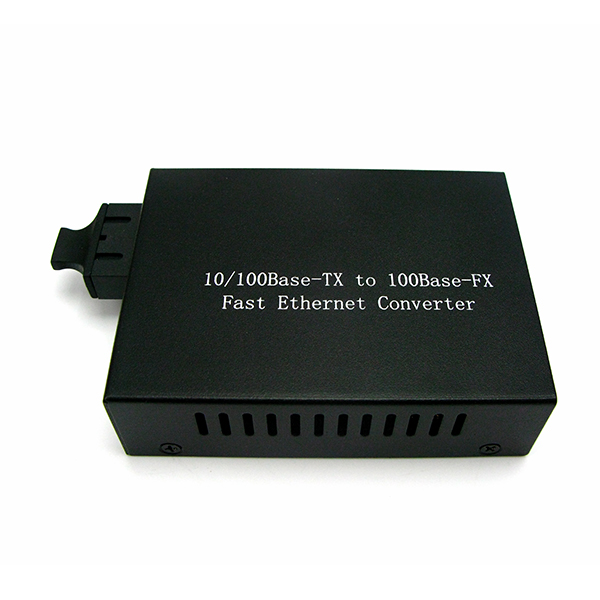
SFP Media Converter is a Fiber to Ethernet Media Converter with Fast Ethernet ports, dual-rate Fast/Gigabit Ethernet ports, or Gigabit Ethernet ports. The ports allow for flexible network configurations using SFP transceivers. And the Fast Ethernet SFP Media Converter uses Fast Ethernet SFPs.
FiberStore Fast Ethernet  SFP Media Converter
According to the types of Fast Ethernet SFPs, there are corresponding kinds of Fast Ethernet SFP Media Converters. We should know the Fast Ethernet standards to understand this device.

Fast Ethernet is a collective term for a number of Ethernet standards that carry traffic at the nominal rate of 100Mbps, against the original Ethernet speed of 10Mbps. There are several Fast Ethernet standards including 100Base-T, 100Base-TX, 100Base-FX, 100Base-SX, 100Base-BX, etc.. Obviously, the "100" means 100Mbps rate.
100Base-T is an initial Fast Ethernet standard for twisted pair cables. The segment length for a 100Base-T cable is limited to 100m. 100Base-TX is the predominant form of Fast Ethernet, and runs over two wire-pairs inside a CAT5 or above cable. Since a typical CAT5 cable contains 4 pairs, it can support two 100Base-TX links with a wiring adaptor. Of the Fast Ethernet standards, 100Base-TX is by far the most widespread and is supported by the vast majority of Ethernet hardware currently produced.

100Base-FX is a version of Fast Ethernet over optical fiber. It uses a 1300nm NIR light wavelength transmitted via two strands of optical fiber, one for receive(RX) and the other for transmit(TX). 100Base-FX should use SC, ST, LC, MTRJ or MIC connectors with SC being the preferred option. However, it is not compatible with 10Base-FL, the 10Mbps version over optical fiber. A 100Base-FX SFP operates on ordinary MMF (multimode fiber) link spans up to 2km.

100Base-SX is another version of Fast Ethernet over optical fiber. It uses two strands of multimode optical fiber for RX and TX. It is a lower cost alternative to using 100Base-FX, because it uses short wavelength optics which are significantly less expensive than the long wavelength optics used in 100Base-FX. 100Base-SX can operate at distances up to 550m. It uses the same wavelength as 10Base-FL. Unlike 100Base-FX, this allows 100Base-SX to be backwards compatible with 10Base-FL. Because of the shorter wavelength used (850nm) and the shorter distance it can support, 100Base-SX uses less expensive optical components (LEDs instead of lasers) which make it an attractive option for those upgrading from 10Base-FL and those who do not require long distances.

100Base-BX is a version of Fast Ethernet over a single strand of optical fiber, while 100Base-FX uses a pair of fibers. Single-mode fiber is used along with a special multiplexer which splits the signal into TX and RX wavelengths. The two wavelengths used for TX and RX are 1310/1550nm. The terminals on each side of the fiber are not equal, as the one transmitting downstream uses the 1550nm wavelength, and the one transmitting upstream uses the 1310nm wavelength. Its transfer distances can be 10, 20 or 40 km. A 100Base-BX SFP operates on ordinary SMF (single mode fiber) single-strand link spans up to 10km.

Contraposing to these different standards, Fast Ethernet SFP Media Converters are designed with different SFP ports to support the 100Base-T SFP, 100Base-FX SFP, 100Base-SX SFP, 100Base-BX SFP and even 100Base-FX to 100Base-TX SFP transceiver which is used in the converter with two SFP ports (100Base-FX and 100Base-TX).

FiberStore supplies not only 100Base SFP Media Converters for Fast Ethernet, but also 1000Base SFP Media Converters for Gigabit Ethernet. These SFP Media Converters extend copper to fiber, multimode to multimode and multimode to single mode fiber by working with the SFP module. An extensive range of SFP Media Converters are in stock to meet every fiber conversion need.

Here are some features of FiberStore's Fast Ethernet SFP Media Converters
1. Extend Fast Ethernet network distances up to 120km
2. Support multimode and single mode fiber
3. Support SC, LC and ST fiber connectors
4. Special functions like Link Pass-Through, Far-End Fault, Auto-MDIX and Loopback

Tips: Link Pass Through is a troubleshooting feature that allows the media converter to monitor both the fiber and copper RX ports for loss of signal. Auto-MDIX is a function automatically detects and configures the twisted pair port on the converter to the correct MDI-X configuration.

2014/01/10

Optical Transceiver Module Tutorial From FiberStore


FiberStore Optical Transceivers
What is an Optical Transceiver module?

Optical Transceiver is a computer chip that uses fiber optic technology to communicate between other devices. This is opposed to a chip that transfers information electrically through metal wires and circuits or by the process of using various wave forms to communicate data. An optical transceiver chip is an integrated circuit (IC) that transmits and receives data using optical fiber rather than electrical wire.
Optical transceivers are typically used to create high bandwidth links between network switches. With the optical transceiver you can also create data transmission links capable of long range transmission.

Tips: Click here to know about the jargons related to fiber optic transceivers.


Development of Optical Transceiver Modules

Optical transceivers play an important role in conveying information across communication channels for Ethernet systems. They act as the all-in-one objects that receive and convey inforamtion, similar to those found in radios and telephone systems. With an optical transceiver, networks save much more space and avoid the need of having a transmitter and receiver apart inside a network. Capable of transmitting information further and faster than older models, the newer transceivers continue to change the way transceivers are used and appear, making for smaller, more compact modules than before. Here is a simple development of the transceivers.

Earliest Modules
SFP Module is one of the earliest transceiver devices which were created for Gigabit Ethernet networks and were preferred for their hot-swappable abilities. GBIC, or Gigabit interface Converters, allowed networks the ability to transmit data across copper or fiber-optic channels, creating a more versatile device than transmitters and receivers. Of course, GBIC modules were also have defect, and many had size and compatibility issues that limited their ability to transmit data across particular distances and at certain wavelengths.

XENPAK Modules
XENPAK became the new standard transceiver with increased support across longer distances and for multiple wavelengths. Unlike GBIC transceivers that sent information across either copper or fiber optic channels, XENPAKs included support for both networks, creating a better, more flexible module. And unlike the bigger GBIC transceivers, XENPAKs were capable of conveying data across short and long distances due to their configuration settings located inside the devices. When utilizing a single-mode configuration, networks create a single ray of light to send data across a long distance, while they use a multimode setup to transmit information across short distances. Both single and multimode fiber optics were utilized by networks, creating the XENPAK device ideal.

10 Gigabit Ethernet
X2 Transceiver and XPAK that the older XENPAK modules could no longer keep up with, were made when the 10 Gigabit Ethernet standard took hold. The smaller, more flexible X2 and XPAK standards allowed for even more support for the different Ethernet standards and were capable of transmitting data across longer distances.

And when the 10G SFP (SFP Plus or SFP+) came into existence, the competing standards of X2 and XPAK couldn't continue to control the market as they once had any more. SFP+ modules allowed for more configuration standards for networks, providing various wavelength and distance configurations for Ethernet.


Principle of Optical Transceiver Modules
Optical transceiver generally includes both a transmitter and a receiver in a single module. The transmitter and receiver are arranged in parallel so that they can operate independently of each other. Both the receiver and the transmitter have their own circuitry so that they can handle transmissions in both directions. The transmitter takes an electrical input and converts it to an optical output from a laser diode or LED. The light from the transmitter is coupled into the fiber with a connector and is transmitted through the fiber optic cable plant. The light from the end of the fiber is coupled to a receiver where a detector converts the light into an electrical signal which is then conditioned properly for use by the receiving equipment.

In a word, the optical transceiver module is the role of the photoelectric conversion. The transmitter converts electrical signals into light signals, and through the fiber optic transmission, the receiving end of the optical signals are converted into electric signals.


How Optical Transceivers Work In Personal Computers
When there is an issue, the pieces that make up the personal computers could be a mystery for many people. Without having an established understanding, we can feel helpless and incapable of fixing even the most basic of problems on ourself. So, it's necessary to make clear that how the transceivers work in the computers.
Considering that many of us are constantly on the internet, it may be easy to get an understanding of the most basic optical transceivers and how they make it so you can connect an search the internet with ease. To provide you with a straight connection to the web, you are either connected through a wireless network, or to an Ethernet cable which is connected to your modem or router when you are online. The Cat5 cable as it is also known, plugs into the computer by using the optical transceiver, which is often not housed on the side of your laptop, or the reverse end of the CPU.

There are many various modules that can be utilized as your optical transceiver. Unlike XFP modules, Cisco SFP modules, GigaBit interface converters, or GBIC modules, are some of your more average transceivers, and are input/output modules with one end that plugs into a gigabit ethernet port, while the opposing side is plugged into the fiber patch cables and links the fiber optic networks. Allowing the devices to process the data accordingly, the base function of the GBIC module is to communicate the signals between the Ethernet network and fiber optic network. One terrific aspect of the GBIC module is that it's a hot pluggable, allotting for a port to be changed from one kind of external interface to another by simply plugging the module in to an alternate external interface without having to power down the host switch or router in the process.


Application of Optical Transceiver Modules

Optical transceiver, essentially just completed the converted of data between different media, can realize the connection between two switches or computers in the 0-120km distance. Its main function is to achieve the conversion between optical-electrical and electrical-optical, including optical power control, modulation transmission, signal detection, IV conversion and limiting amplifier decision regeneration. In addition, there are security information query, TX-disable and other functions. Here is a summary in the practical application.

1. Optical transceivers can realize the interconnection between switches.

2. Optical transceivers can realize the interconnection between the switch and the computer.

3. Optical transceivers can realize the interconnection between computers.

4. Optical transceivers can act as the transmission repeater.
When the actual transfer distance exceeds the nominal transmission distance of the transceiver, in particular, the actual transfer distance exceeds 120km alerts, with 2 sets transceiver back to back in the case of on-site conditions allow, repeaters or the use of "optical-optical" conversiona relay, is a very cost-effective solution.

5. Optical transceivers can offer conversion between single-mode and multimode fiber connection.
When the networks appear to need a single multimode fiber connection, you can use a multimode transceiver and a single-mode transceiver back-to-back connections, which can solve the problem of single multimode fiber converted.

6. Optical transceivers can offer WDM transmission.
The lack of resources of long-distance fiber optic cable, in order to improve the utilization rate of the fiber optic cable, and reduce the cost, transceiver and wavelength division multiplexer (WDM multiplexer) with the use of two-way information on the same fiber transmission.


Classification of Optical Transceiver Modules
Optical Transceiver modules can be classified according to the following aspects.

1. Optical Fiber Type
Single-mode fiber transceiver and Multimode fiber transceiver. The single-mode version has a transmission distance of 20 to 120 km, while the multimode one's is 2 to 5 km. Due to the different transmission distance, the transceivers' transmit power, receiver sensitivity and the use of wavelength will be different.

2. Optical Fiber Count
Simplex fiber transceiver and Duplex fiber transceiver. The simplex version receives the data sent in a single fiber transmission, While the duplex one receives data transmitted on a dual fiber transmission. By definition, single fiber devices can save half of the fiber, a fiber that is in the receive and transmit data, where the fiber is very applicable to resource constraints. These products use the wavelength division multiplexing techniques, mostly using the wavelength 1310nm and 1550nm.

3. Transmission Rate
Transmission rate refers to the number of gigabits transmitted per second, per unit of Mbps or Gbps. Optical modules cover the following main rate: low rates, Fast, Gigabit, 1.25G, 2.5G, 4.25G, 4.9G, 6G, 8G, 10G and 40G.

4. Package
SFP, SFP+, GBIC, XFP, XENPAK, X2, 1X9, SFF, 200/3000pin, XPAK
, etc. Click for Details About Related Packages.


FiberStore Optical Transceiver Custom Solutions

2013/12/18

FiberStore SFP Plus Transceiver Modules Are On Sale Now

FiberStore has been suppling optical transceivers since years ago. The SFP plus transceiver modules are on sale recently and almost all the transceiver modules are much cheap then before.

SFP plus, or SFP+, is the upgraded version of the previous SFP module with higher data rate and new industrial standards. It is small compared to any of the currently shipping form factors and provides the best density per line card.
SFP+ offers customers both immediate benefits and long-term advantages in supporting evolving data center needs. The SFP+ specification was initially published on May 9, 2006, and version 4.1 was published on July 6, 2009. It's a international industry format supported by many network component vendors.
SFP+ is an innovative, next-generation transceiver module. Initially, it's targeted to support speeds of 10 Gbps for next-generation Gigabit Ethernet applications (10G SFP) and eight.5Gbps Fiber Channel systems. What is more, SFP+ is by using lower power consumption for under 1W which is even economical. These transceivers are with managed digital optical monitoring and superior high temperature performance.

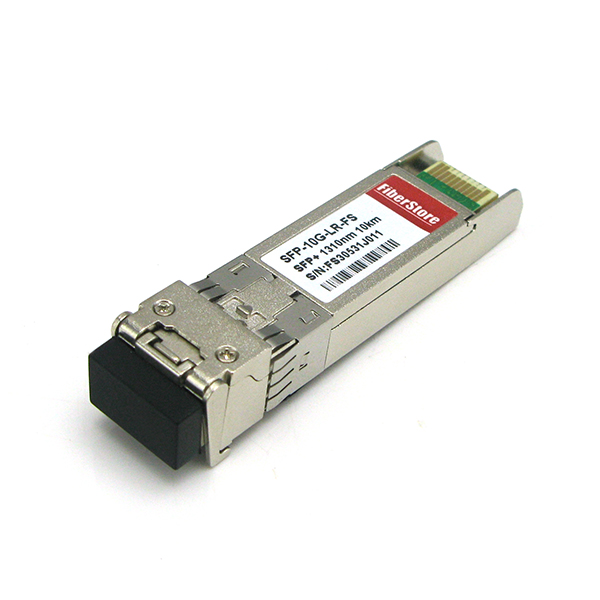
Several industrial acknowledged standards for SFP+ has been released for 10Gpbs networks, including 10Gbase-SR, which define the SFP+ transceiver working with OM3 10G multimode fiber at 30 to 300 meters range, 10Gbase-LR which define the SFP+ transceiver dealing with single mode fiber at 10km range, 10Gbase-LRM which define the FDDI multimode fiber at around 220 meters range. These 3 versions of SFP+ are generally called SFP-10G-SR, SFP-10G-LR and SFP-10G-LRM for brief in Cisco SFP+ series. Click to buy Cisco SFP-10G-SR from FiberStore.

In comparison to earlier XENPAK or XFP modules, SFP+ module is by using more compact size compared with the former 10G transceivers such as X2 and XENPAK, leaving more circuitry to become implemented around the host board rather than inside the module. SFP+ manily has three advantages. First, it has a more compact form factor package than X2 and XFP. Second, it can connect with exactly the same data rate of XFP, X2 And XENPAK directly. Third, the cost of SFP+ is lower than XFP, X2 And XENPAK.

SFP+ transceiver is interchangeable with SFP transceiver and can be used in exactly the same cages as SFP transceiver. For 10G applications, SFP+ transceiver includes a smaller footprint minimizing power consumption than XFP transceiver. The electrical interface towards the host board for SFP transceiver and SFP+ transceiver is the same serial.

Many companies, such as Cisco, Finisar, and Sumitomo, have released SFP+ transceivers. SFP+ ensures the 10Gbps data transmission and the most densely installation capability as well as the lowest cost. Currently it is well known as the best option for the 10Gbps fiber optic transceivers. Included in this, Cisco SFP+ transceiver may be the mainstream market. Cisco 10Gbase SFP transceivers are used for high speed 10Gigabit Ethernet, linking the gear to fiber optic networks. Cisco SFP+ products include active SFP+ cables and SFP+ transceivers. There is also copper transceiver offered by Cisco.

Tips: the Cisco SFP transceivers mentioned in this article are Cisco compatible SFP plus transceivers which are manufactured by FiberStore.

2013/10/25

SFPs Find The Position In Commercial Market


Small Form factor Plug (SFP) is a compact transceiver that is popular in telecommunication and for data communication. It uses a device which contains a parent board and interfaces it to a fiber optic networking cable. SFP is mainly made to hold Gigabit Ethernet and various other standard communications in it.
Wide types of SFPs can be found, providing the customer by having an option to choose among various unique models, which suits the apt needs. They will use different set of transmitter types on it facilitating you to find the desired transceiver. The SFP transceiver gives link for getting the necessary optical reach through the existing optical fiber. For instance you will find optical fibers like single mode fiber and multimode fiber separately for appropriate usage. In every mode there are different group of fibers flexible for the users' choice.

In general the rate of signal transmission of SFP module ranges from 100Mbps to 4Gbps. The transceivers work on a distance range varying from 500 meters to 100 kilo meters and also the working wavelength for a number of modules are generally 850nm, 1310nm or sometimes 1550nm. This excellent type of transceiver allows an ease to alter and keep in comparison with other traditional modules. The users can certainly and genuinely replace single module of SFP while the process is running rather than replacing the whole board containing large number of modules in it.

10G SFP
SFP transceivers find the position in commercial market having a capacity to vary data rates as much as 4.25 Gigabits in a single second. The upgraded version namely SFP plus or SFP+ supports data rate as high as 10 Gigabits per second. This rate of transfer is Ten times faster than usual Gigabit Ethernet device. The characteristics of 10G SFP are multifold as following:
  • It can be used instantly connecting to internet.
  • It can be hotly plugged and employed for transferring data.
  • It may withstand temperature up to 70 degree Celsius and may even function at zero degrees Celsius.

Some people might think that SFP would consume more current. Actually, it's not true. SFP consumes less power but is highly efficient in transferring data. In recent times, SFP transceiver can be used for supporting digital diagnostics monitoring (DDM) activities as reported by the standard matching to it. Hence it is employed for digital optical monitoring services. By making use of this element, the user will keep track of the real time limiting factor of the SFP and monitor the optical input power and output power along with temperature and also the voltage way to obtain the transceiver.

There are lots of benefits of using SFP. You could have multiple choices for internet connectivity using this swappable input/output appliance. The device of SFP comes with copper wire interface by which the user can conveniently hold optical fiber communications. It's now possible to transfer SDI video outputs over the coaxial cable through the 10G SFP copper. There is also CWDM/DWDM support in some single mode fiber transceivers.

Nowadays SFP has numerous commercial applications in SONET network, point to point mode of networking, Gigabit Ethernet, metro access networks, FTTD, routers, switches, bridges, servers, etc. It also finds a lot of demand kept in storage area network, local area network, high-speed computer links and switching system. SFP offers large range of detachable interfaces to UTP or coaxial cables and multimode or single-mode fibers.


About the author:
FIBERSTORE is a famous optical communication supplier, who can offer both SFP and SFP+ transceivers with all of varieties, along with other modules for example GBIC, XFP, XENPAK, X2, etc.

2013/05/24

SFP Optical Transceiver Modules


SFP package – hot little package module, the highest rate of up to 10G, is mostly used with LC interfaces. SFP is abbreviation of Small Form Pluggable, which can be simply considered as an upgraded version of GBIC. SFP module has half volume of GBIC, only the size of a thumb. It can be configured on the same panel, more than double the number of ports. SFP module has the same other basic functions as GBIC. Some switch vendors said the SFP module is mini GBIC.

SFP modules through the CDR and electronic dispersion compensation on the outside of the module, while the more reduced the size and power consumption. They are used for telecommunications and data communications applications in optical communication. SFP connected network devices such as switches, routers and other equipment motherboards and optical fiber or UTP cables. SFP is also a kind of industry specifications which some fiber optic device providers support. SFP modules support SONET, Gigabit Ethernet, Fiber Channel as well as some other communication standards. This standard extends to SFP+, which can support 10.0 Gbit/s transfer rate, including 8 gigabit Fiber Channel and 10GbE. The introduction of fiber optic and copper versions of the SFP+ module versions, and the module’s XENPAK, X2 or XFP version comparison, SFP+ module will remain in the part of the circuit board to achieve, rather than the module implementation.

SFP transceivers have many different types of transmission and reception, the user can select the appropriate link for each transceiver to provide based on available fiber types (such as multi-mode fiber or single-mode fiber) can reach the optical performance. Available optical SFP modules are generally divided into the following categories: 850nm / 550m distance MMF (SX), 1310nm wavelength / 10 kilometers from the SMF (LX), 1550nm / 40 km distance XD, 80 miles from the ZX, 120 yards from the EX or EZX, and DWDM. SFP transceivers are also available copper interfaces, making the design primarily for fiber optic communication devices are also able to host UTP network cable communication. There are also CWDM SFP and single-fiber “two-way” SFP.

SFP optical module configuration are: lasers (including transmitter TOSA with the receiver ROSA) and board composition IC and external accessories and external accessories, there are housing, base, PCBA, pull ring, clasps, unlock, rubber stopper composition, In order to facilitate the identification generally pull ring color discrimination module parameter type.

In accordance with the rate divided 155M/622M/1.25G/2.125G/4.25G/8G/10G, 155M and 1.25G market is used more, 10G technology is maturing, demand is rising attitude to development. In accordance with the wavelength divided 850nm/1310nm/1550nm/1490nm/1530nm/1610nm, the SFP 850nm wavelength multimode transmission distance 2KM below 1310/1550nm wavelengths for single mode, the transmission distance 2KM above, relatively speaking, this three wavelengths price is cheaper than the other three.

Many people do not know the difference between SFP and SFP+. This sometimes caused unnecessary trouble. 10G module has gone from 300Pin, XENPAK, X2, XFP development, and ultimately with the same size and SFP 10G transmission signal, which is the SFP+. SFP with its compact low cost advantages to meet the equipment needs of high-density optical modules, implemented from 2002 standard to 2010 has replaced 10G XFP and become the mainstream of market.

SFP+ optical modules have these following advantages. First, SFP+ package has the more compact dimensions than than XFP X2 (with the same size as SFP). Second, SFP+ optical modules can be direct connected with XFP, X2 and XENPAK modules which have the same types. Third, the cost ratio is lower than XFP, X2 and XENPAK products.

FiberStore offers cost-effective standards-based compatible Cisco SFP Transceivers. As a 3rd party OEM manufacturer, our Cisco SFP transceiver is delivered to worldwide from our factory directly.

Source: FiberStore